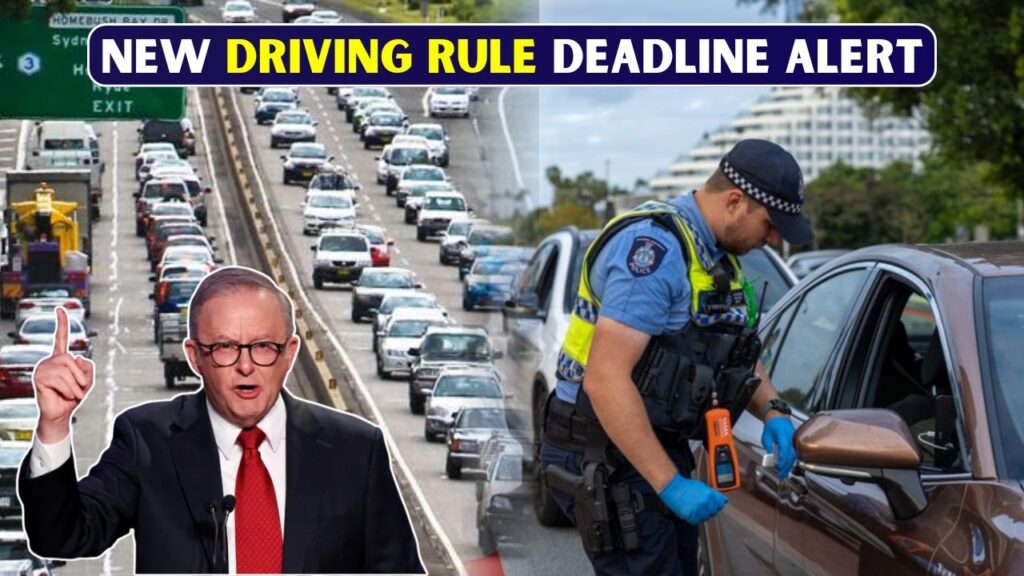
Drivers across Australia are entering a new phase of road safety enforcement as updated driving regulations take effect from April 3. The nationwide rollout introduces stricter monitoring systems, stronger penalties, and expanded detection technology designed to reduce dangerous driving behaviour.
Authorities have confirmed that enforcement begins immediately, with no adjustment period or warnings for non-compliance. This means drivers who fail to follow updated requirements could face fines, demerit points, or even licence suspension from day one.

Understanding what has changed—and how to adapt quickly—will be essential for avoiding costly penalties and maintaining safe driving habits throughout 2026.
What the New Driving Rule Covers
The updated driving regulation focuses on reducing high-risk behaviours that have been consistently linked to serious road incidents. Rather than targeting a single offence, the new framework strengthens multiple aspects of enforcement.
Key areas addressed under the updated rule include:

Expansion of camera enforcement zones
Stricter penalties for high-risk offences
Enhanced compliance monitoring
Reduced tolerance thresholds for violations
Integration of advanced detection technologies
These changes represent a significant shift from traditional enforcement methods to a more automated and technology-driven approach.
Authorities have emphasized that enforcement will begin immediately on April 3, meaning drivers must already be compliant before taking to the road.
Why the New Rule Is Being Introduced

Transport and road safety agencies have cited rising accident rates and repeat offences as primary reasons for introducing stricter measures.
Data collected over recent years has shown that distracted driving, speeding, and repeated violations remain leading causes of serious crashes. Officials believe that stronger enforcement, supported by modern technology, will help reduce dangerous behaviour across both urban and regional road networks.
Another major factor behind the rule change is the increasing availability of automated safety tools. Advances in monitoring technology now allow authorities to detect violations more accurately and consistently, improving compliance across the driving population.
Ultimately, the new regulation is designed to support long-term road safety goals while reducing the number of preventable injuries and fatalities.
Technology Plays a Bigger Role Than Ever Before
One of the most notable elements of the new driving rule is the expanded use of intelligent monitoring systems.
AI-Based Detection Systems
Artificial intelligence technology is now being used to identify risky behaviour in real time. These systems can detect actions such as distracted driving, improper lane usage, and certain prohibited activities behind the wheel.
Unlike manual enforcement, automated systems operate continuously, significantly increasing the likelihood that violations will be recorded.
Expanded Camera Coverage
Drivers may notice an increase in surveillance across key roadways, including major highways, intersections, and high-risk zones.
This expanded coverage ensures that compliance monitoring is more consistent across different regions.
Automated Violation Processing
Camera-detected offences will be processed electronically, reducing delays and ensuring faster issuance of penalties.
This streamlined system removes the possibility of relying on manual warnings or enforcement gaps.
Who Will Be Most Affected by the Changes
While the updated rule applies to all motorists, some driver groups are more likely to feel its impact due to their driving patterns or existing records.
Learner and Provisional Drivers
New drivers often face stricter conditions compared to experienced motorists. With enhanced monitoring now in place, learner and provisional licence holders must be particularly cautious.
Even minor mistakes can result in penalties that affect their ability to progress to full licensing stages.
Drivers With Existing Demerit Points
Motorists already carrying demerit points face a higher level of risk under the updated system.
Any additional violation could push them closer to suspension thresholds, making compliance critical.
Commercial and Rideshare Drivers
Drivers who spend long hours on the road—including delivery, logistics, and rideshare operators—may encounter increased exposure to monitoring systems.
Their frequent driving activity naturally increases the chances of detection if rules are not followed carefully.
Repeat Offenders
Individuals with a history of repeated violations are likely to face the strongest consequences.
Authorities have indicated that stricter enforcement is intended to discourage recurring unsafe behaviour patterns.
What Changes From April 3
The April 3 deadline marks the official beginning of stricter enforcement standards.
From this date forward:
Penalties for certain offences may increase
Demerit points will apply under revised thresholds
Camera-detected violations will be processed automatically
Compliance checks will become more frequent
Ignorance of the new rule will not be accepted as a valid defence
These changes are designed to ensure that all drivers operate under consistent expectations nationwide.
How Drivers Are Responding to the Update
Early reactions suggest that many drivers are taking the new rule seriously and adjusting their behaviour ahead of enforcement.
Some motorists report becoming more cautious when approaching monitored zones, maintaining safer speeds, and avoiding unnecessary distractions while driving.
Others believe that increased awareness campaigns would help drivers better understand the full scope of the changes.
Regardless of individual opinions, most drivers agree that avoiding fines and licence suspension is a strong motivator for safer driving habits.
Practical Steps to Avoid Penalties
Adapting to the updated rule does not require complex changes, but it does demand greater awareness and consistent discipline behind the wheel.
Review Current Road Rules
Drivers should take time to revisit updated regulations relevant to their licence category. Even experienced motorists may discover new requirements that were not previously enforced.
Staying informed is the first step toward maintaining compliance.
Monitor Your Demerit Point Status
Knowing how many demerit points remain on your licence can help prevent accidental suspension.
Regular checks allow drivers to make informed decisions about risk management and driving behaviour.
Eliminate Distractions
Distracted driving remains one of the most common causes of penalties.
Simple habits—such as keeping mobile devices out of reach while driving—can significantly reduce risk.
Maintain Safe Speeds
Speed-related violations continue to be among the most frequently detected offences.
Maintaining consistent speed discipline, especially in monitored zones, is essential under the new enforcement system.
Ensure Vehicle Compliance
Routine vehicle maintenance is another important factor in avoiding penalties.
Drivers should confirm that lights, signals, tyres, and safety features are operating correctly to prevent compliance issues.
Long-Term Benefits of the New Rule
Although stricter enforcement may initially feel challenging, the long-term advantages are expected to be substantial.
Improved compliance leads to:
Fewer road accidents
Lower injury rates
Reduced property damage
Greater public confidence in road safety systems
More predictable traffic behaviour
These outcomes benefit not only individual drivers but also communities, businesses, and emergency services.
Safer roads contribute to smoother transport operations and reduced economic losses caused by accidents.
Preparing for the Future of Driving Compliance
The April 3 enforcement deadline represents more than just a regulatory update—it signals the beginning of a technology-driven era in road safety.
Automated systems, intelligent monitoring tools, and data-driven enforcement methods are likely to become standard features of modern traffic management.
Drivers who adapt early will find it easier to navigate future changes and maintain safe driving records.
Staying informed, practising responsible driving habits, and respecting updated regulations will remain essential skills in this evolving landscape.
Final Thoughts
The new nationwide driving rule taking effect from April 3 introduces stricter enforcement, smarter detection systems, and stronger penalties for unsafe behaviour.
While the transition may require adjustments, the overall goal is clear: creating safer roads through consistent compliance and advanced monitoring.
Drivers who prepare ahead of time, stay informed about updated requirements, and practise disciplined driving habits will be best positioned to avoid penalties and maintain full control of their driving privileges throughout 2026 and beyond.